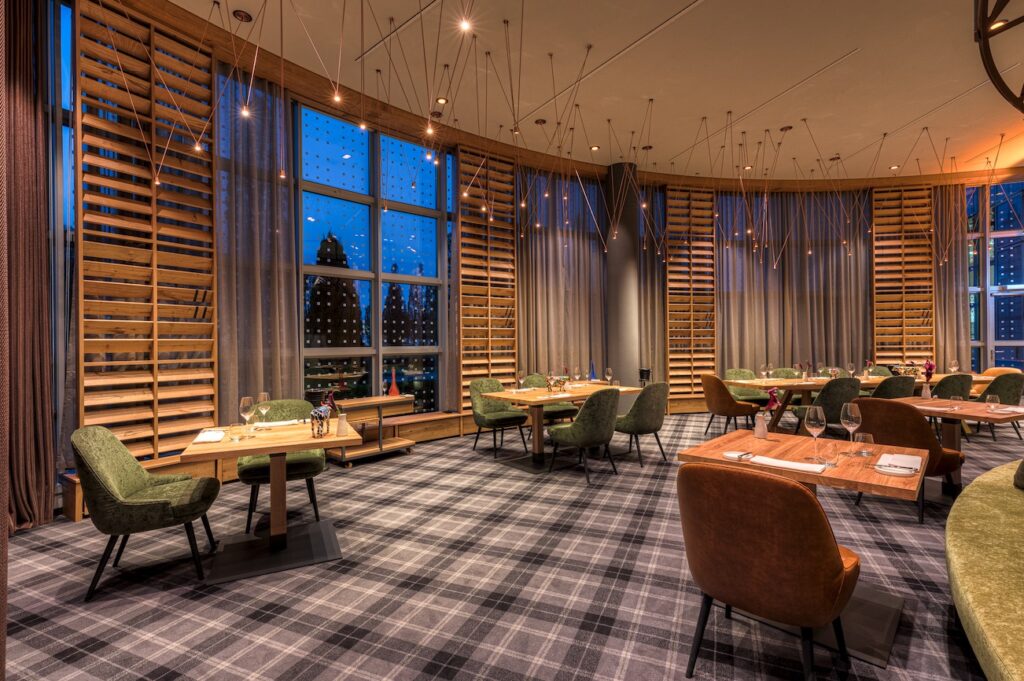
Here’s the mountain dining problem nobody talks about: the views are always better than the food. You drive two hours, pick a spot with five-star reviews and a stunning deck, and a server hands you a laminated menu with a $28 burger that tastes like it was frozen a month ago.
That story ends differently at Mountain Hub Gourmet. Not because of the scenery — the scenery is everywhere up here. Because of what’s on the plate.
This is a restaurant that has actually figured out high-altitude fine dining. Here’s what makes it work, what to order, and when the trip isn’t worth your time.
The Mountain Dining Trap Most Travelers Fall Into
Mountain restaurants have a structural problem. Not laziness — though there’s some of that — but real logistical friction that pushes kitchens toward mediocrity.
Altitude affects taste. Air pressure drops at elevation, your sense of smell dulls, and your perception of sweetness and saltiness weakens significantly. It’s the same mechanism that makes airline food taste flat and lifeless. A kitchen sitting at 8,000 feet that doesn’t actively compensate for this serves food that tastes underseasoned regardless of the chef’s skill. Most mountain kitchens don’t compensate at all.
The Supply Chain Problem
Ingredient delivery to high-altitude destinations is less frequent and far less reliable than city kitchens deal with. That reality pushes kitchens toward pantry items with longer shelf lives — frozen proteins, pre-made sauces, canned bases. Add in seasonal closures, brutal staff turnover, and the fact that most mountain restaurant guests just want something hot after a day on the trail, and you get a race to the lowest common denominator.
The result is a repeating pattern: overpriced mediocrity dressed up in a mountain view. Travelers mistake the scenery for the experience. They leave before they fully register that they just paid $130 for two people to eat grocery-store-quality food with a better backdrop.
What a Serious Mountain Kitchen Has to Do Differently
Fix the supply chain. Source locally and frequently, so you’re not relying on a twice-weekly delivery truck bringing proteins from three states away. Shrink the menu — a 40-item menu at altitude is a guarantee of inconsistency, not flexibility. Compensate actively for altitude’s effect on palate: higher-fat sauces that carry flavor, more aggressive seasoning, ingredients that hold their profile in thin air.
It’s a short list of principles. Few mountain restaurants actually follow them. Mountain Hub Gourmet does, and every dish reflects it.
Mountain Hub Gourmet vs. Other Elevation Restaurants
To understand where Mountain Hub Gourmet actually sits in the landscape of serious mountain dining, here’s a direct comparison against other credible elevation options in North America.
| Restaurant | Altitude | Menu Size | Main Course Range | Reservation Lead Time | Best For |
|---|---|---|---|---|---|
| Mountain Hub Gourmet | ~8,500 ft | 14 dinner / 9 lunch | $45–$72 | 2–3 weeks (weekends) | Best food-to-value ratio in tier |
| Alpenglow Stube (Keystone, CO) | 11,444 ft | Prix fixe only | ~$150/person | 1–2 weeks | Special occasions, extreme altitude |
| The Summit at The Broadmoor (CO) | ~9,100 ft | 18 items | $38–$65 | 1 week | Reliable but corporate feel |
| Juniper Bistro (Banff, AB) | ~4,500 ft | 22 items | $32–$58 | 2–5 days | Casual mountain fine dining |
| Typical mountain lodge restaurant | Varies | 25–40 items | $18–$35 | Walk-in | Quick meal, no pretense |
Mountain Hub Gourmet’s pricing lands between casual lodge dining and full resort tasting-menu territory. That gap is exactly where the value lives — you’re getting serious technique and sourcing without paying the resort premium that places like Alpenglow Stube command.
Tasting Menu vs. À la Carte
The six-course tasting menu runs $145 per person. Wine pairing adds $65. For a first visit, the tasting menu is the right call — it covers the kitchen’s strongest work in a curated sequence and the pacing is designed around it. À la carte works well for lunch or a shorter commitment, but the math closes faster than people expect once you add two starters and a shared dessert. You often end up at $140–$160 for two people anyway.
What’s Actually Worth Ordering
Forget menu aesthetics and server upselling. Here are the dishes that justify the drive, and what to skip.
- Alpine Herb-Crusted Rack of Lamb ($68) — The kitchen’s signature and the dish people mention when they recommend this place to someone else. Local lamb, house-made rosemary jus, roasted root vegetables. Order it medium-rare. The kitchen will try to steer you toward medium — don’t let them. Well-done is a waste of this protein.
- Wild Mushroom and Truffle Risotto ($52) — Heavy cream, real Périgord truffle shavings (not truffle oil — an important distinction), locally foraged mushrooms sourced within the region. Takes 22 minutes. Every minute is justified. The best vegetarian main in any mountain restaurant operating at this elevation.
- House-Smoked Mountain Trout ($45) — Cold-smoked on-site, plated with pickled cucumber, crème fraîche, and dill oil. Lighter than the lamb or bison. The right choice for lunch or if you want the kitchen’s quality without spending the rest of the afternoon in a food coma.
- Bison Short Rib ($72) — 48-hour braise, deeply rich, falls apart on the fork. Share it. A full portion is genuinely too much for one person who also ordered a starter. Two people splitting this and one other main is the right equation.
- Juniper Berry Panna Cotta ($16) — The only dessert worth ordering. The kitchen makes it with house-infused juniper cream and it tastes like the surrounding landscape in the best possible way. The chocolate torte is technically competent and completely unmemorable.
Skip the charcuterie board at $34 — it’s undistinguished and doesn’t reflect what this kitchen actually does well. The weekly soup rotates and is inconsistent; skip it unless your server volunteers enthusiasm about it without prompting.
The Drink Program
The wine list skews toward Burgundy and Northern Rhône — smart choices for food pairing at altitude, where lighter, higher-acid wines perform better than heavy tannic reds. The cocktail menu features spirits infused in-house; the juniper gin old-fashioned at $18 is the standout. Elevation Brewing Co. is on draft — their pale ale and amber run $9 each and are the right move if you’re not committing to a full bottle of wine.
The Sourcing Is the Real Differentiator
Four local farms within 60 miles. Two foragers supplying seasonal ingredients on a weekly rotation. Menu updated every Thursday based on what actually came in. That’s the operating system behind the food quality — and it’s not a marketing line on the back of the menu. It’s why the mushroom risotto has foraged mushrooms that taste like they were pulled from the ground two days ago, because they were.
Most restaurants at this price point source locally as a story. Mountain Hub Gourmet sources locally out of practical necessity, and the food is better for it.
How to Plan Your Visit Without Wasting the Trip
When is the best time to go?
Late spring (May–June) and early fall (September–October). The kitchen gets the best seasonal ingredients during these windows — spring ramps, fall mushrooms and game meats. Crowds are manageable, reservations open up on 1–2 weeks’ notice, and service is less stretched than peak summer. Summer is peak season: great weather, but reservations fill 3–4 weeks out and the dining room runs at full capacity, which compresses service quality slightly.
Winter visits are possible and atmospheric, but weather-dependent. Access roads can close on short notice. Check conditions the morning of your reservation and know that the kitchen doesn’t issue refunds for cancellations inside 48 hours, regardless of weather.
Do you actually need a reservation?
For Friday or Saturday dinner: yes, and book 2–3 weeks out. Weekday dinners have considerably more flexibility. Lunch Tuesday through Thursday is walk-in friendly, but assume weekend lunch is as competitive as weekend dinner — because it is.
The kitchen holds a small number of tables for same-week bar seating. Call the morning of and ask specifically about bar availability. It works more often than people expect, especially on weeknights.
How much time should you budget?
Tasting menu: 2.5 to 3 hours. À la carte dinner: 90 minutes to 2 hours. Don’t book the tasting menu if you need to be off the mountain by 8:30pm. The pacing is intentional and the kitchen won’t rush it on request. Fighting the pace shortens the experience without improving it.
What about dietary restrictions?
Gluten-free is well-handled — several items are naturally gluten-free and the kitchen understands cross-contamination protocols. Vegan is harder. The menu is dairy and protein-forward, and the kitchen’s strengths don’t translate to fully plant-based cooking. Call ahead and they’ll prepare something, but if plant-based is your priority, Nourish Bistro in Canmore does it with more intention and at a lower price point.
Three Mistakes That Ruin an Otherwise Great Dinner
Walking in without a reservation on a weekend is the single most avoidable mistake. It happens constantly. The host will be genuinely apologetic and the answer will still be no. Hoping for bar seats works roughly 30% of the time. The other 70%, you drive back down the mountain having eaten nothing and feeling annoyed at a restaurant that didn’t do anything wrong.
- Over-ordering. The menu reads lighter than the portions actually are. Two starters, two mains, and one shared dessert is the right amount for two people. Three starters plus full mains each means uneaten food, a bill that feels high relative to what you consumed, and the wrong memory of an otherwise excellent meal.
- Skipping the tasting menu to save money. As noted above, the à la carte math closes faster than expected. The tasting menu is the more intentional, better-sequenced version of roughly the same expenditure. First-timers who skip it to be conservative almost always wish they hadn’t.
One more worth naming: don’t fit this into a packed itinerary day as a quick stop. If you’re squeezing Mountain Hub Gourmet between a morning hike and a 7pm commitment, pick a different restaurant. The pacing is the point.
When Mountain Hub Gourmet Isn’t the Right Call
Families with children under 12 will struggle here. There’s no children’s menu. The tasting menu format is not designed for young diners, and the pace will frustrate kids and the tables around them. For family mountain dining with comparable scenery and zero stress, The Lake Terrace Dining Room at The Broadmoor in Colorado Springs has a proper family setup and doesn’t require you to manage a three-hour dinner with a nine-year-old.
Budget travelers won’t find good value. You’re looking at $90 per person minimum for dinner once you add a drink. If your ceiling is $60 per person, Juniper Bistro in Banff or Bella Eatery in Canmore, Alberta serve genuinely good food in a mountain setting at a price that doesn’t require justification.
Solo travelers can make it work — the bar seating is comfortable and the bartenders know the menu as well as any server — but the experience is built for two to four people. The tasting menu especially reads better as a shared thing.
The Real Calculation
You’re spending $145–$210 per person and committing half a day to the drive. That math works for a special trip, a milestone occasion, or a longer mountain itinerary where this is a deliberate destination meal. It doesn’t work as a casual Tuesday dinner when you just want something decent after hiking.
The travelers who leave disappointed almost always went in with the wrong occasion, not the wrong restaurant. Match the occasion to what this restaurant actually is — a serious, unhurried, high-quality meal — and it delivers on every part of the promise.
That two-hour drive you’ve made before, the one that ended with a laminated menu and a burger you’re still annoyed about? Mountain Hub Gourmet is the version of that trip where you don’t feel like you were taken for a ride. The mountain is still there. Now the food matches it.