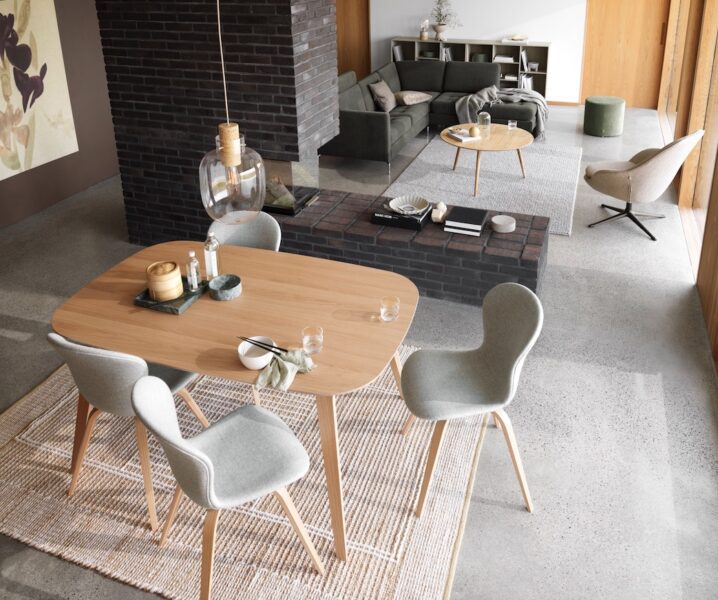
The most useful piece of information here isn’t that BoConcept won a luxury furniture award. It’s that the brand won it three years running.
Single-year wins reflect a strong product cycle. Three consecutive wins typically signal something structural — consistent quality control, supply chain reliability, and design standards that don’t erode as production scales. For buyers weighing a significant furniture investment, that pattern is more credible than any individual award press release.
This article covers what luxury furniture awards actually evaluate, where BoConcept sits relative to major competitors, and which specific pieces from the brand’s catalog represent the most defensible purchases.
This is not interior design advice — consult a certified interior designer before making significant purchasing decisions for your home.
What Luxury Furniture Awards Actually Evaluate
Most credible furniture industry awards don’t judge aesthetics alone. Programs that have been running for more than a decade typically evaluate brands across five measurable criteria: material specification standards, design originality, production consistency, sustainability practices, and after-sale service capability.
That last criterion is where many furniture brands fail quietly. A sofa that photographs well in a showroom means nothing if the brand can’t supply replacement components five years into ownership. Award programs that track brands across multiple years are essentially testing whether quality is repeatable — not whether a brand had a strong launch season.
Material Standards That Separate Premium Furniture From Overpriced Furniture
Genuine luxury furniture specification typically means kiln-dried hardwood frames using European beech or birch, high-density foam at 35 kg/m³ or above, and upholstery fabrics rated for at least 30,000 Martindale rub cycles. BoConcept’s standard upholstery options have generally met or exceeded the 30,000 rub cycle threshold across their residential catalog — a specification that matters if the furniture will see actual daily use rather than functioning as showroom display.
By comparison, most mid-market brands priced between $500 and $1,500 per sofa typically use foam densities between 18–25 kg/m³ and fabrics rated at 15,000–20,000 rub cycles. That gap is measurable: it usually manifests as visible fabric wear and seat compression within 3–5 years under normal residential use. Buyers who’ve paid $1,200 for a sofa that looks tired after four years have experienced this specification gap firsthand.
Brands at the very top of the category — B&B Italia, Cassina, and Minotti — match or exceed BoConcept’s material standards while adding Italian regional craft traditions, heritage provenance, and manufacturing transparency that commands a legitimate price premium. BoConcept’s distinction is reaching these material standards at a price point roughly 40–60% below Italian luxury competitors.
Why Consistency Across Three Years Matters More Than a Single Win
Award judges in the furniture industry typically have access to data consumers don’t: customer satisfaction survey results, warranty claim rates, trade feedback from interior designers, and sustainability audit outcomes. A brand can optimize for a single award cycle. Repeating a win three times requires that the underlying performance be genuine, because criteria change slightly each year and judging panels rotate.
Industry observers have generally found that brands with multi-year award track records outperform single-win brands on long-term quality retention — a pattern that holds in furniture as it does in most consumer durables. That doesn’t make BoConcept definitively the best brand for every buyer. But it means the award record reflects real performance, not a well-timed PR push.
BoConcept vs. Five Major Competitors: A Direct Comparison
Award wins carry more meaning when set against the competitive landscape. Here’s how BoConcept stacks up against five major competitors across the criteria that matter most to buyers in 2026:
| Brand | Origin | Sofa Starting Price (approx.) | Modular Options | Lead Time | Customization Depth |
|---|---|---|---|---|---|
| BoConcept | Denmark (1952) | $1,800 | Extensive | 6–10 weeks | 90+ fabric/leather options |
| Roche Bobois | France (1960) | $5,000 | Yes | 10–16 weeks | High — artist collaborations |
| B&B Italia | Italy (1966) | $6,000 | Limited | 12–18 weeks | Moderate |
| Cassina | Italy (1927) | $3,000 | No | 10–14 weeks | Limited |
| Minotti | Italy (1948) | $4,000 | Yes | 12–20 weeks | Moderate |
| HAY | Denmark (2002) | $900 | Limited | 2–4 weeks | Low |
BoConcept occupies a specific and well-defined position: the most accessible entry point into award-winning luxury furniture, with modular flexibility and customization depth that most Italian competitors don’t match at any price. For buyers with a $2,000–$5,000 per-piece budget, no comparable brand in this table offers equivalent specification depth.
Why Frequent Travelers Develop Strong Opinions About Furniture Brands
Frequent travelers are better furniture judges than most people realize — and BoConcept’s hospitality sector presence gives useful context to its residential award wins.
Anyone who has stayed in well-designed hotels across Scandinavia, Northern Europe, or Japan has been an unwitting participant in long-term furniture testing. Hotel properties that specify premium furniture are running continuous durability trials under conditions that exceed normal residential use: multiple occupants per room per week, heavy housekeeping handling, and no gradual replacement schedule. Furniture that survives five years in a high-occupancy hotel room without visible degradation was specified correctly.
BoConcept supplies to hospitality projects across more than 65 countries — not as a primary hospitality brand, but as a frequently specified option for boutique hotels and business-class properties seeking Scandinavian design credentials without the lead times and minimum order volumes required by Italian luxury brands. Travelers who notice a consistent quality across mid-to-high-end hotel common areas in Northern Europe have likely encountered BoConcept pieces without recognizing them by name.
This has a direct implication for residential buyers. If a piece performs under hotel conditions, it performs under residential ones. The Martindale rub cycle ratings, foam density specifications, and frame construction standards that award judges evaluate are the same criteria hotel procurement managers use when placing furniture orders. The award criteria and the hospitality specification criteria overlap substantially.
Travelers who develop strong furniture preferences through repeated hotel stays are, in practical terms, doing comparative testing of professional-grade specifications. That instinct — wanting the feeling of a hotel room you genuinely enjoyed — is a reasonable driver for a luxury furniture purchase, and BoConcept’s design language maps closely to the Scandinavian mid-century aesthetic that defines most well-regarded contemporary hotel interiors.
How to Design a Hotel-Inspired Living Room at Home
Hotel designers who produce spaces that feel curated rather than assembled work from a specific methodology. It’s learnable and applies directly to residential spaces without a designer’s budget.
Step 1: Choose One Anchor Piece and Configure Everything Else Around It
Hotel designers select the primary seating piece first. Most residential buyers do the opposite — buying pieces individually as budgets allow, then discovering nothing relates to anything else.
For a living room, the anchor should be a sofa with clear proportional authority over the space. BoConcept’s Carlton sofa starts at approximately $2,200, comes in 90+ upholstery options including leather grades other brands reserve for higher price tiers, and sits at 85cm depth — appropriately scaled for rooms above 15 square meters. For rooms under 12 square meters, the Fermo sofa at approximately $1,900 with a slimmer 75cm profile generally reads better and avoids the space feeling consumed by seating.
Step 2: Apply the 60-30-10 Color Distribution Without Deviation
Luxury hotel rooms don’t feel visually chaotic because designers follow a strict color distribution: 60% dominant neutral (walls and flooring), 30% secondary tone (large upholstery and rugs), 10% accent colors (cushions, art, and hardware). Deviating from this ratio is typically the difference between a room that reads as expensive-but-restrained and one that reads as busy. Once your anchor sofa sets the 30% tone, every subsequent purchase should be evaluated against how it fits the remaining percentages — not against whether you like it in isolation.
Step 3: Control Texture More Than Color
High-end hotel interiors typically feature three to five distinct textures: smooth upholstery, rough-weave textiles, a reflective surface, raw wood or stone, and a soft-pile element. Color similarity across these textures creates the effect that’s hard to name but immediately recognizable in well-designed spaces. BoConcept’s Osaka coffee table (approximately $800–$1,200 in oak or walnut veneer) and Imola accent chair ($900–$1,400 depending on upholstery) work effectively together because they bring material contrast — smooth lacquer finishes next to natural wood grain — while staying within the same tonal range. That combination reads as intentional rather than assembled.
The Biggest Mistake Premium Furniture Buyers Make
They buy without measuring doorway clearances, elevator shaft widths, and stairwell turning radii. A BoConcept Merano sectional configured at 280cm will not navigate a standard 90cm apartment corridor. Most luxury furniture returns are not quality failures — they’re logistics failures that were entirely predictable before the order was placed. Request exact external dimensions for every piece, including arm heights and sofa leg clearances, before committing to any configuration.
When BoConcept Is the Wrong Choice
What if Italian manufacturing provenance matters to you?
BoConcept is Danish, with manufacturing primarily in Denmark and Eastern Europe. If you specifically want Italian heritage — the regional craft traditions of Brianza, the certified workshops behind Cassina’s LC2 armchair (approximately $3,200 in standard leather, a Le Corbusier design in continuous production since 1928) or B&B Italia’s Tufty-Time sofa (approximately $8,500–$13,000 depending on configuration) — BoConcept won’t satisfy that requirement regardless of its award record. That provenance argument is genuinely irreplaceable and commands a legitimate premium for buyers who value it.
What if you’re furnishing a short-term rental property?
Don’t use BoConcept for holiday lets or high-turnover rental properties. Premium upholstery in a short-term rental context typically degrades within 18–24 months, eliminating the durability advantage that justifies the price. For rental properties, IKEA’s KIVIK sofa ($700–$900) with a machine-washable cover or the SÖDERHAMN sectional ($1,100–$1,500) represents a smarter capital allocation. Reserve luxury furniture specification for owner-occupied primary residences where the durability advantages you’re paying for will actually be realized over a multi-year ownership period.
What if your total room budget is under $5,000?
Trying to furnish an entire room at BoConcept prices on a $5,000 ceiling leaves two pieces with nothing remaining for supporting elements. A more coherent approach: one BoConcept statement piece — typically the sofa — paired with secondary furniture from HAY, Muuto, or &Tradition. All three are Scandinavian design brands with strong quality-to-price ratios in the $200–$800 per piece range. The design language is compatible. The visual result reads as a considered room rather than a compromised one.
BoConcept Pieces Worth Buying — and One Category to Skip
Not all furniture within a brand ages equally. BoConcept’s most defensible long-term purchases are its architecturally grounded pieces — those with clean geometry and no ornamental elements that date quickly.
The Sofas That Hold Up
The Carlton remains BoConcept’s most consistent catalog entry: clean lines, no decorative details that will feel dated in five years, available from two-seat configurations (approximately $2,200) to large sectionals (approximately $4,500+). The Merano sectional suits families or frequent hosts who need generous seating — 95cm seat depth, modular, typically $3,500–$5,000 for a meaningful L-configuration. For smaller spaces, the Fermo at approximately $1,900 is the correct choice. Don’t buy the Merano for a room under 20 square meters — the proportions will overwhelm the space regardless of how good the upholstery looks.
Chairs, Tables, and Storage Worth Knowing
The Imola accent chair ($900–$1,400) has appeared in boutique hotel lobby specifications across Northern Europe for over a decade. At that price point, it’s one of the more honestly specified interpretations of the egg-chair form available without moving into the $3,000+ range. The Lugano dining chair ($350–$500) is stackable, commercially rated, and integrates cleanly with non-BoConcept dining tables if you’re mixing brands. The Osaka coffee table ($800–$1,200 in oak or walnut) holds its visual neutrality well — it doesn’t require surrounding BoConcept pieces to look intentional.
For storage, BoConcept’s modular wall unit systems (typically $1,200–$3,000 depending on configuration) are among the better offerings in a category where most luxury furniture brands have historically underperformed. These systems age well because they’re reconfigurable — buyers can add modules or adjust layouts as their space evolves without starting over.
The Category to Skip
BoConcept’s bed frames are competent but not meaningfully differentiated from Scandinavian competitors at lower price points. The brand’s decorative accessories — cushions, rugs, and table lighting — are priced at luxury levels without carrying the same specification advantage as the seating and storage categories. Buy accessories from HAY or &Tradition instead, and redirect the saved budget toward a larger sofa configuration or a higher-grade upholstery option on your anchor piece. That allocation consistently produces better results.
This is not interior design advice — consult a certified interior designer for personalized guidance tailored to your specific space and budget before committing to significant furniture purchases.