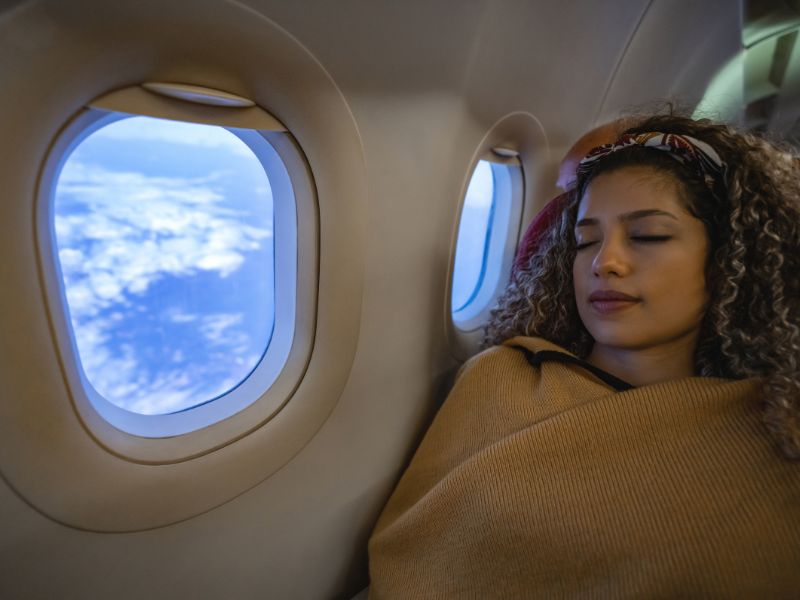
Three hours into a red-eye from JFK to Heathrow, most passengers have given up. Heads lolling. Reading lights on. The guy next to you watching a movie without headphones. You’re not alone: a 2026 survey by Sleep Foundation found that 68% of flyers report worse sleep quality on planes than at home. The cabin pressure alone mimics being at 8,000 feet, which drops blood oxygen levels by roughly 4% compared to sea level. That alone makes you feel groggy.
But sleeping on a plane is not impossible. It just requires specific choices — not luck. Here are five tips that address the real problems: noise, pressure, posture, light, and timing.
1. The Real Reason You Can’t Sleep: Cabin Pressure and Humidity
Most people blame noise or cramped seats. The bigger issue is the air itself. At cruising altitude, cabin pressure is set to the equivalent of 6,000-8,000 feet above sea level. Your body’s oxygen saturation drops slightly. That triggers a mild stress response — cortisol creeps up, melatonin production drops. You feel wired even when exhausted.
Humidity makes it worse. Planes keep humidity around 10-20%. Dry air dries out your nasal passages and throat. You wake up with a scratchy throat, stuffy nose, or headache. That’s not bad luck. That’s physiology.
What actually helps
Hydrate before boarding. Not during. Downing water during the flight just means bathroom breaks. Drink 500ml of water in the hour before boarding. Skip alcohol and caffeine — both dehydrate and disrupt REM sleep. A 2026 study in Thorax showed that alcohol combined with cabin pressure drops blood oxygen further.
For ear pressure, use EarPlanes ($6.99 for a pair). These are filtered earplugs that regulate pressure changes during descent. They don’t block noise completely, but they stop the sharp pain that jolts you awake.
The one supplement worth trying
Melatonin. But timing matters. Take 3mg melatonin 30 minutes before the plane dims its lights. Not at boarding. Not after takeoff. Sync with the cabin’s attempt to mimic nighttime. The Natrol Melatonin Fast Dissolve tablets ($8.49 for 60) dissolve under your tongue and work in 15-20 minutes.
2. Noise: The Difference Between Earplugs and Active Noise Cancellation
Plane noise sits around 80-85 decibels during cruise. That’s louder than a vacuum cleaner. Your brain never fully ignores it. Cheap foam earplugs reduce noise by about 20-30 dB. That helps. But they don’t cancel the low-frequency drone of the engines — the hum that keeps your brain in a state of low alert.
Active noise cancellation (ANC) handles that low-frequency hum. It doesn’t just block sound; it creates an opposite wave to cancel it. The result: the cabin noise drops from “annoying” to “barely noticeable.”
Best options for different budgets
Bose QuietComfort Ultra Headphones ($429) remain the gold standard for ANC on planes. They weigh 250g, fold flat, and last 24 hours on a charge. The ear cups are deep enough to avoid pressure on your ears — critical for side sleepers. They also have an “aware” mode for announcements.
For a cheaper option, the Anker Soundcore Space Q45 ($99) offers 90% of the ANC performance. Battery life is 65 hours. They don’t fold as flat, but they cost a third of the Bose.
If you refuse to wear over-ear headphones, the Loop Quiet earplugs ($19.95) reduce noise by 24 dB. They sit flush in your ear, so you can sleep on your side. They don’t do ANC, but for the price, they’re the best in-ear option for side sleepers.
One mistake people make
Wearing ANC headphones without playing any audio. ANC works best when combined with white noise or ambient sounds. Without audio, your brain still registers the slight pressure change from ANC. Play a looping brown noise track at low volume — it masks the remaining engine drone. The myNoise app (free with in-app purchases) has a specific “airplane cabin” sound profile.
3. Posture: Why Travel Pillows Usually Fail
Standard U-shaped pillows push your head forward. That strains your neck and collapses your airway. You wake up with a sore neck and a dry mouth because you’ve been mouth-breathing.
The goal is not to keep your head upright. The goal is to stop your head from dropping sideways or forward. Two positions work on a plane: leaning forward onto a tray table with a pillow, or leaning back with lateral support.
Forward lean setup
Place a Tempur-Pedic Travel Pillow ($59) on the tray table. Rest your forehead on it. This position keeps your spine aligned. The key is the pillow height — it must be high enough that your neck stays straight, not bent. The Tempur-Pedic pillow compresses slowly and holds shape. It also doubles as a lumbar support when not in use.
Lateral support setup
If you must lean back, skip the U-shape. Use the Cabeau Evolution Cool ($79.99). It has a higher back support that stops your head from dropping sideways. It also has a strap that attaches to the headrest. The memory foam is firm — some people find it too firm. But it works better than any inflatable pillow.
For side sleepers, the Trtl Pillow Plus ($44.99) is a different approach. It’s a scarf with an internal brace that supports your neck from the side. You lean into it. It takes up almost no space in your bag.
| Pillow | Type | Price | Best for |
|---|---|---|---|
| Tempur-Pedic Travel Pillow | Compressible foam | $59 | Forward lean sleepers |
| Cabeau Evolution Cool | Memory foam with strap | $79.99 | Backward lean, neck support |
| Trtl Pillow Plus | Scarf with brace | $44.99 | Side sleepers, packability |
| Loop Quiet earplugs | Silicone earplug | $19.95 | Side sleepers, noise reduction |
4. Light: The Overlooked Disruptor
Your body’s internal clock — the circadian rhythm — is triggered by light hitting your eyes. Even a sliver of cabin light or a neighbor’s reading light can suppress melatonin production. The dimmable cabin lights are not dark enough. They’re usually set to around 50 lux, which is enough to keep your brain in “daytime” mode.
The solution is total blackout. But not all sleep masks are equal.
Flat masks vs. contoured masks
Flat silk masks (like the Alaska Bear Natural Silk Sleep Mask, $12.99) are comfortable but leak light around the nose. If you’re a side sleeper, they also press against your eyelashes, which can wake you up.
Contoured masks have molded cups that sit away from your eyes. The Manta Sleep Mask ($39) uses adjustable cups that block all light. The cups are deep enough that you can open your eyes inside the mask without touching fabric. It also has a strap that doesn’t mess up your hair. For side sleepers, the cups compress slightly but still block light.
The cheap backup
If you forget your mask, fold a buff or a thin scarf into a strip and wrap it around your eyes. It’s not as effective, but it blocks enough light to help. A 2026 study in Journal of Clinical Sleep Medicine found that even partial light blocking improved sleep onset by 12 minutes compared to no mask.
5. Timing: When You Board Matters More Than You Think
Most people board as early as possible. That’s a mistake for sleepers. Boarding early means sitting in a warm, crowded cabin while passengers stow bags and talk. You lose the first 20 minutes of potential sleep time. By the time the plane levels off, you’ve already missed the window.
The ideal boarding time depends on your seat. If you have a window seat, board last. You’ll walk past everyone already seated, stow your bag quickly, and sit down. The plane will be at cruise altitude within 15-20 minutes. You can set up your sleep setup immediately.
If you have an aisle seat, board earlier. You need time to arrange your bag under the seat in front of you so you can stretch your legs. Aisle sleepers also need to position their pillow before the person next to them settles in.
The 90-minute rule
Flights under 90 minutes are not worth sleeping on. You won’t enter deep sleep. You’ll just feel worse. If your flight is 2-3 hours, aim for a 20-minute power nap. Set an alarm on your watch — not your phone — so you don’t disturb neighbors. The Apple Watch Ultra 2 ($799) has a silent haptic alarm that taps your wrist. The Fitbit Charge 6 ($159.95) does the same for less.
Red-eye flights: the exception
On red-eyes (flights departing between 10 PM and 2 AM), your body is primed to sleep. The cabin lights will dim. Use that. Don’t watch a movie. Don’t eat the meal if it’s served — ask for it to be skipped. Put your mask and earplugs on before the lights go down. Your melatonin surge will handle the rest.
One more thing: set your watch to your destination’s time zone as soon as you board. That mental shift helps your brain align with where you’re going, not where you are.
Summary: What Works for Different Sleepers
- For noise-sensitive sleepers: Bose QuietComfort Ultra headphones ($429) or Loop Quiet earplugs ($19.95). Brown noise app essential.
- For side sleepers: Trtl Pillow Plus ($44.99) + Manta Sleep Mask ($39). Skip U-shaped pillows.
- For back sleepers: Cabeau Evolution Cool ($79.99) + EarPlanes ($6.99). Lean back with headrest strap.
- For short flights under 2 hours: Skip sleep entirely. Use EarPlanes and a caffeine pill (100mg) before landing.
- For red-eyes: Board last. Skip the meal. Mask + earplugs + melatonin 30 min before lights dim. Set watch to destination time.
None of these tips fix a cramped seat or a crying baby. But they address the three things you can control: noise, light, and posture. Pick the combination that fits your sleeping style. Test it on a shorter flight first. The red-eye is not the place for experiments.