Pho and banh mi are excellent. But they represent maybe 5% of what Vietnam actually eats. After three weeks eating my way from Hanoi to the Mekong Delta, I found dishes that never make the tourist Instagram feeds but define how locals actually eat. Here is what I learned, what I ordered twice, and what you should not skip.
Bun Cha: The Dish Hanoi Actually Eats for Lunch
Walk into any Hanoi lunch spot between 11am and 1pm. You will see tables covered with small bowls of grilled pork patties floating in a sweet-savory fish sauce broth. That is bun cha.
It works like this: you get a bowl of broth with two types of pork — a fatty patty and a slice of grilled belly. On the side, a basket of fresh herbs (mint, perilla, cilantro) and a plate of cold rice vermicelli. You dip the noodles and herbs into the broth, eat the pork, repeat. The broth is the star: warm, tangy from vinegar, sweet from sugar, deep from caramelized fish sauce.
Where to eat it: Bun Cha Huong Lien in Hanoi (24 Le Van Huu). This is the exact spot where Anthony Bourdain and Barack Obama ate in 2016. A full bowl costs 50,000 VND (about $2).
What most tourists get wrong: They order it for dinner. Locals eat bun cha for lunch only. The pork is grilled fresh in the morning, and by evening, the quality drops. Go early.
Bun Bo Hue: The Spicy Soup That Beats Pho
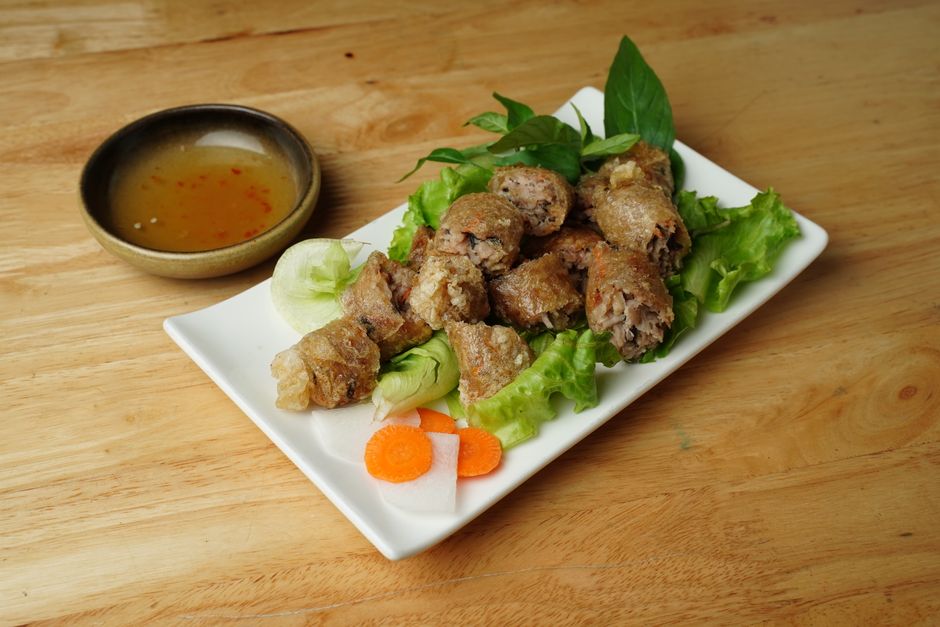
Pho is delicate. Bun bo Hue is aggressive. This central Vietnamese beef noodle soup from the city of Hue uses a broth made from beef bones and lemongrass, stained red from annatto seeds and chili oil. It comes with thick round rice noodles, slices of beef shank, pork hock, and cubes of congealed pork blood.
The flavor profile is completely different from pho. Where pho relies on star anise and cinnamon, bun bo Hue uses shrimp paste and lemongrass. It is salty, funky, spicy, and deeply savory. You are supposed to add fresh herbs, lime, and sliced banana blossom on top.
Where to eat it: Quan Bun Bo Hue in Ho Chi Minh City (52 Nguyen Hue Street). A bowl costs 60,000 VND. The broth simmers for eight hours minimum.
One warning: This soup is legitimately spicy. Vietnamese restaurants in the US tone it down. In Vietnam, the chili oil is not optional. If you have a low spice tolerance, ask for “it” (meaning less spicy).
Cao Lau: Hoi An’s Noodle Dish You Cannot Find Anywhere Else
Cao Lau is the most geographically restricted dish I have ever encountered. You can only get proper cao lau in Hoi An. The noodles are made using water from the ancient Ba Le well, mixed with ash from a specific local tree. That is why the noodles have a chewy, almost gray color and a texture that holds up to the broth without getting soggy.
The dish combines these thick noodles with slices of roasted pork, fresh herbs, bean sprouts, and a small amount of broth — it is not a soup, more a “noodle salad with broth”. Crunchy fried rice paper squares go on top. You mix everything together, crunch included.
Where to eat it: Cao Lau Ba Be (6 Truong Minh Luong, Hoi An). 40,000 VND per bowl. Open 7am to 10pm. Do not order cao lau anywhere outside Hoi An — it will be a sad imitation using regular noodles.
Banh Xeo: The Vietnamese Crepe You Eat with Your Hands
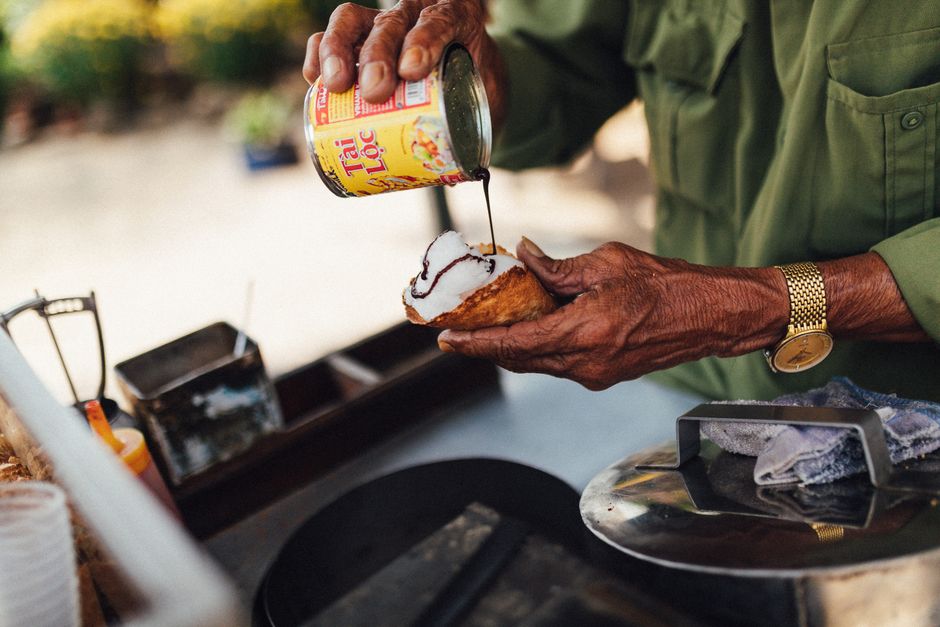
Banh xeo translates to “sizzling cake”. The name comes from the sound the rice batter makes when it hits the hot oiled pan. The batter is mixed with turmeric, giving the finished crepe a bright yellow color. Inside: shrimp, pork belly, bean sprouts, and sometimes sliced onions.
The eating method matters more than the ingredients. You tear off a piece of the crispy crepe, wrap it in a lettuce leaf with mint and perilla, then dip it in nuoc cham (fish sauce with lime, sugar, garlic, and chili). One bite delivers crunch, cold lettuce, warm filling, and salty-sour sauce.
Where to eat it: Banh Xeo Muoi Xao in Ho Chi Minh City (157 Cong Quynh, District 1). 35,000 VND per crepe. They make them fresh to order — you can watch the process from your seat.
Common mistake: Using a fork and knife. The lettuce wrap is not optional decoration. It provides the textural contrast and balances the richness of the fried crepe. Skip the lettuce, and the dish becomes a greasy mess.
Com Tam: Broken Rice with the Best Pork You Will Eat
Com tam means “broken rice”. The rice grains are fragments left over from the milling process. Originally considered poor people’s food, it is now a Saigon staple served everywhere from street carts to sit-down restaurants. The rice is cooked fluffy and light, then topped with a grilled pork chop marinated in fish sauce, garlic, and honey.
The plate comes with a fried egg, shredded pork skin, a slice of pork meatloaf (cha), pickled vegetables, and a small bowl of fish sauce. You pour the sauce over everything, break the egg yolk, and mix it all together.
Where to eat it: Com Tam Ba Ghien (84 Ly Tu Trong, District 1, Ho Chi Minh City). 55,000 VND. The pork chop here is grilled over charcoal — you can smell it from half a block away.
Goi Cuon vs. Cha Gio: When to Order Which
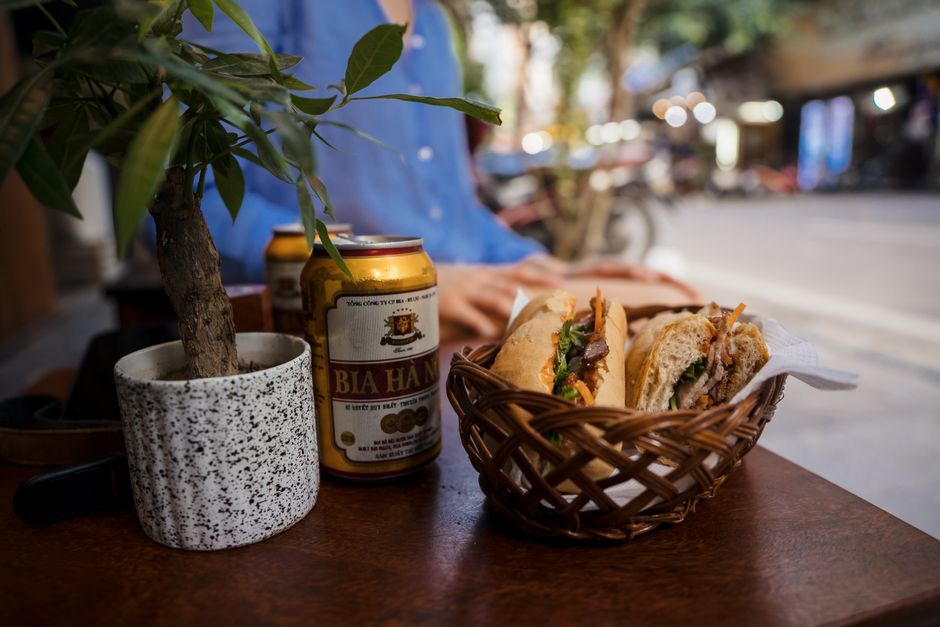
Every menu in Vietnam offers both spring rolls. They are not interchangeable.
| Roll Type | Goi Cuon (Fresh) | Cha Gio (Fried) |
|---|---|---|
| Wrapper | Rice paper, translucent, chewy | Wheat flour, crispy, golden |
| Filling | Shrimp, pork, vermicelli, lettuce, herbs | Minced pork, wood ear mushroom, glass noodles |
| Texture | Cold, fresh, crunchy from vegetables | Hot, oily, shatteringly crisp |
| Dipping sauce | Hoisin-peanut sauce (sweet) | Nuoc cham (fish sauce based, sour-salty) |
| Best for | Hot days, light meals, appetizers | Cold days, beer drinking, main courses |
Where to get them: Any sidewalk vendor in Ho Chi Minh City. Look for the ones with a glass display case showing the rolls being assembled fresh. 10,000-15,000 VND per roll. Never buy pre-wrapped spring rolls from a cooler — the rice paper hardens and becomes inedible within 20 minutes.
Practical Tips for Eating Street Food in Vietnam
Three things I learned the hard way.
1. Look for the plastic stool. The best food in Vietnam is served on tiny red or blue plastic stools on the sidewalk. If a place has proper chairs and air conditioning, you are paying tourist prices for average food. The plastic stool places serve what locals actually eat.
2. Watch the meat thermometer. Street food safety is about volume. A stall that sells 200 bowls of bun cha per day has turnover so high the meat never sits out long enough to spoil. A stall that sells 20 bowls is riskier. Eat where the line is long.
3. Carry small bills. Most street vendors do not have change for 500,000 VND notes ($20). Break large bills at a convenience store or hotel. Keep a stack of 10,000 and 20,000 VND notes in a separate pocket. It speeds up every transaction and avoids awkward negotiations over change.
4. Learn the phrase “it nhe” (less spicy). Vietnamese cuisine uses fresh chili liberally. If you order bun bo Hue or bun rieu without specifying, you will get the full heat. “It nhe” (ee nyeh) gets you a milder version without insulting the cook.
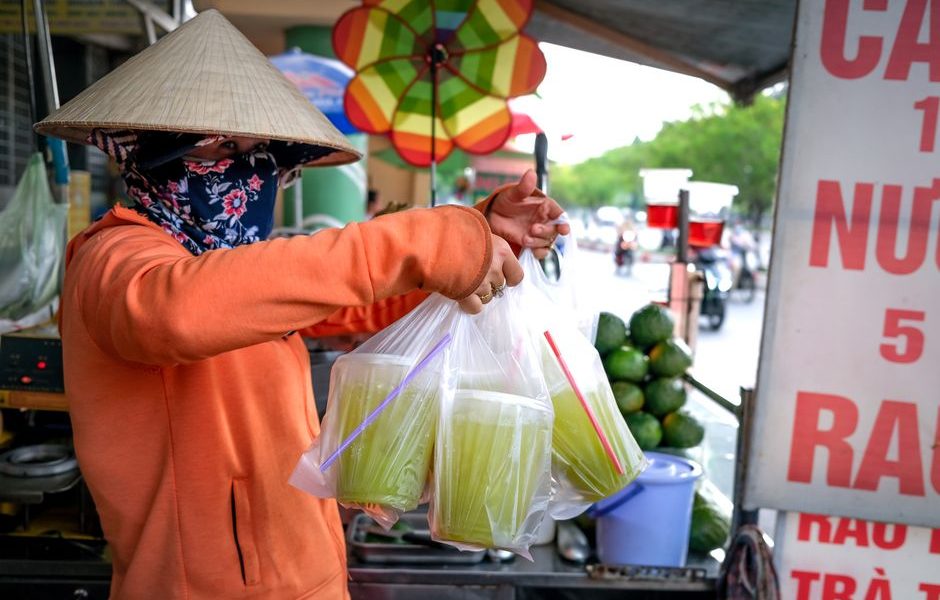
5. Do not drink tap water. Ice is safe in Vietnam — it is made from filtered water in commercial factories. But tap water carries bacteria your gut does not recognize. Stick to bottled water, hot tea, or fresh coconut water from street vendors.