
A common misconception is that Lisbon is an easy, flat city break. It is not. Lisbon is compact on a map, but its hills, polished cobblestones, late dinners and scattered viewpoints can turn a short visit into a tiring one if you plan by distance alone.
Spring is still one of the strongest times to go. You get longer daylight, green hills around Sintra and comfortable walking temperatures, but you also need a rain plan and firm choices. This itinerary gives you a clear base, three useful neighbourhood routes, the viewpoints worth the climb and one day trip that will not swallow your entire weekend.
Which Lisbon neighbourhood should you choose for a spring weekend?
Your hotel area affects the whole trip more than a ten-minute difference in room price. Choose a neighbourhood that matches your evening plans, because climbing back up a hill after dinner is not a small detail when you have already walked 18,000 steps.
| Neighbourhood | Best for | Walking reality | Verdict |
|---|---|---|---|
| Baixa | First-time visitors and easy transport | Flat central streets, busy during the day | Best practical base |
| Chiado | Cafés, shops and central restaurants | Some slopes, excellent access to Baixa | Best all-round choice |
| Alfama | Historic atmosphere and early viewpoints | Steep lanes, uneven cobbles and stairs | Best for atmosphere |
| Graça | Quieter evenings and broad city views | High on the hill; fewer late transport options | Best for repeat visitors |
| Cais do Sodré | Nightlife, the river and Cascais trains | Flat, lively and louder at night | Best for a coastal day trip |
Pick Chiado for the least wasted time
For a first long weekend, Chiado is the safest choice. You can walk downhill to Baixa, reach Bairro Alto for dinner, and cross to Cais do Sodré without building your day around taxis. It also gives you a quick escape when spring rain arrives: cafés, bookshops and museums are close together.
Choose Alfama only if the setting matters more than convenience
Alfama rewards slow wandering, especially around the cathedral, Santa Luzia and Portas do Sol. The trade-off is real. The official Alfama guide describes the area as a network of steep lanes and alleys, so guests with heavy luggage, limited mobility or a strong preference for quiet transport should choose Baixa or Chiado instead.
How should you spend the first day on foot?
Do not start with a checklist of distant attractions. Lisbon works better as a sequence of connected walks, with the first day kept central so you can adjust for weather and energy.
- Morning: Rossio to Baixa. Begin at Rossio Square, walk through Rua Augusta and continue to Praça do Comércio. This gives you the city’s grandest urban scale before the hills begin. Pause for coffee before crossing into the older quarters.
- Late morning: the Sé and Alfama. Walk uphill to Lisbon Cathedral, then follow the lanes toward Santa Luzia. Spend time looking at the tiled walls and small courtyards instead of trying to reach the next landmark every five minutes.
- Lunch: stay above the river. Eat in Alfama or Graça rather than dropping back to the waterfront. That saves a second climb and leaves the afternoon flexible.
- Afternoon: choose one museum or castle. Do not force both the castle and several major museums into the same afternoon. The better plan is one paid interior visit followed by an unstructured walk.
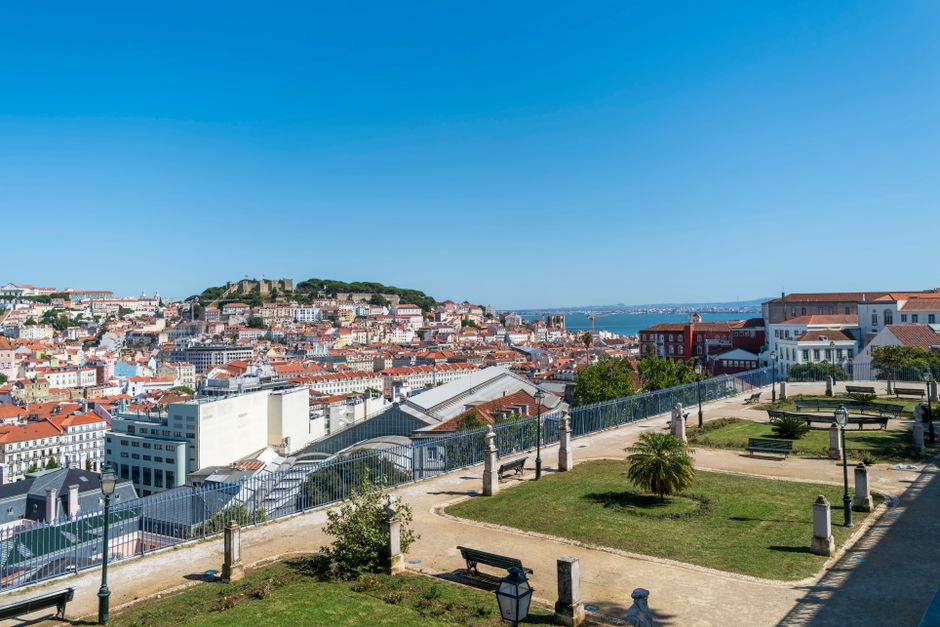
- Sunset: move west, not higher. Finish at São Pedro de Alcântara or the riverfront near Cais do Sodré. The light is better when you stop treating every viewpoint as a separate mission.
Wear shoes with a firm, flexible sole. Smooth fashion trainers can lose grip on wet calçada, the patterned limestone paving used throughout the centre. Carry a light waterproof layer even when the morning forecast looks clear; spring showers can arrive quickly from the Atlantic.
What does a realistic three-day Lisbon itinerary look like?

The strongest plan gives each day one main geographic idea. That limits backtracking and leaves enough space for meals, queues and the occasional wrong turn. Spring light is especially useful here: you can start early without travelling in darkness, then reserve the longer evenings for viewpoints and riverside walks.
Day one: central Lisbon and the old hills
Use the walking route above as your arrival-day plan. If your flight lands late, cut the castle and keep the evening to Baixa, Praça do Comércio and a short walk through Chiado. That version still feels like Lisbon and does not make your first night a race.
Day two: Belém with a weather backup
Spend the morning in Belém, where the riverfront creates more breathing room than the historic centre. Group the Jerónimos area, the waterfront and one museum rather than attempting every monument. If rain becomes heavy, move indoors earlier and return to the river when the sky clears. Spring wind can make the exposed waterfront feel colder than the city centre, so pack one extra layer.
Use public transport for the outward journey and walk between the main stops. The city’s official tourism information lists Belém as a separate area from central Lisbon, and that separation matters: trying to add Alfama before lunch creates unnecessary crossings. Finish with a sunset drink near the river or return to Chiado for dinner.
Day three: one day trip, not two
Reserve the final full day for one destination. Sintra gives you palaces, wooded hills and a cooler microclimate; Cascais gives you an easier coastal rhythm; Costa da Caparica gives you Atlantic space without a full excursion schedule. Pick one and stay with it. A rushed Sintra, Cabo da Roca and Cascais circuit can look impressive on paper but leaves little time for the places that justify the journey.
Lisbon’s urban rail network connects the city with Sintra and Cascais, but service times and attraction admissions change. Check the current CP Lisbon urban train information before leaving and build in a buffer for the return.
Which Lisbon day trip fits your spring weekend?
Is Sintra the best choice for a first visit?
Yes, if you want history, gardens and a dramatic change of scenery. CP’s Rossio to Sintra journey takes roughly 40 minutes on the urban line, but the station is only the start: the main palaces sit uphill and require local transport or a substantial walk. Book a timed entry where the attraction requires one. The current official page for the National Palace of Sintra lists adult admission at €13 and opening hours of 9:30 to 18:30, with final admission at 17:30; verify those details before travel because heritage-site schedules can change.
When should you choose Cascais instead?
Choose Cascais when you want a lower-effort day with ocean views, a compact centre and a return to Lisbon before dinner. Trains leave from Cais do Sodré, making the trip especially convenient if you stay near Baixa, Chiado or the river. Walk the old centre, continue toward Boca do Inferno if the weather is calm, and leave time for the coast rather than trying to add Sintra.
Is Costa da Caparica a better spring alternative?
Choose Costa da Caparica when you want a beach walk, surf atmosphere and a less museum-heavy day. The coast has around 15 kilometres of beaches, and the official tourism guide places it roughly 30 minutes from central Lisbon by suitable public transport or road routes. Spring water is cold and the wind can be sharp, so this is a coastal outing, not a guaranteed swimming day. For a three-night weekend, my verdict is Sintra for cultural depth, Cascais for ease and Caparica for open space.
What mistakes can ruin a spring weekend in Lisbon?
- Booking only by room price. A cheap room high in Graça or deep in Alfama can cost you time, taxi fares and tired legs. Pay for a central location when the trip lasts only three nights.
- Assuming spring means dry weather. Keep one indoor block available each day. A museum, long lunch or tiled church can rescue the afternoon when rain reaches the hills.
- Relying on tram 28 for the whole Alfama plan. The historic tram is scenic, but queues and crowding can erase the time you hoped to save. Walk part of the route and use transport only for the steepest section.
- Scheduling sunset by the clock rather than the sky. Check the forecast and wind direction. A high viewpoint can be uncomfortable in strong gusts, while a sheltered garden may produce better photographs.
- Combining every famous day trip. Sintra, Cabo da Roca and Cascais can work with a private vehicle and a tightly managed day, but it is a poor default for a relaxed weekend. Choose one destination and make it memorable.
- Ignoring the return journey. Check the last practical train or bus before setting off, especially on Sundays and public holidays. The last connection should shape dinner plans, not become an afterthought.
My clear recommendation is Chiado as the base, São Pedro de Alcântara for the first sunset and Sintra for the one major day trip. That combination gives you central access, a strong city panorama and a genuine change of scenery without turning the weekend into a transport exercise.
The forward-looking view
Lisbon’s appeal will keep shifting as visitor numbers, transport patterns and attraction booking rules change. The durable strategy is simple: stay central, plan by neighbourhood, protect time for viewpoints and check official operators close to departure. That approach keeps a spring weekend flexible while preserving the parts of Lisbon that never go out of fashion: hills, tiled streets, Atlantic light and the next view around the corner.